
 Published at: 2022-11-22
Malaysia’s King Al-Sultan Abdullah said on Tuesday that he will pick the next prime minister soon after the leading two contenders failed to win a majority, but did not specify timing for his decision, as the political crisis from an inconclusive election dragged on for the third day.
Saturday’s election resulted in an unprecedented hung parliament, with neither opposition leader Anwar Ibrahim nor former premier Muhyiddin Yassin winning the simple majority needed to form a government.
The election prolongs political instability in the Southeast Asian nation, which has had three prime ministers in as many years, and risks delays to policy decisions needed to galvanise an economic recovery.
The king had given political parties until 2 p.m. (0600 GMT) on Tuesday to put together alliances needed for a majority.
But the incumbent Barisan Nasional coalition said it would not support either candidate, a move that prevented both Anwar and Muhyiddin from reaching a majority.
It is now up to the constitutional monarch, who plays a largely ceremonial role but can appoint whoever he believes will command a majority.
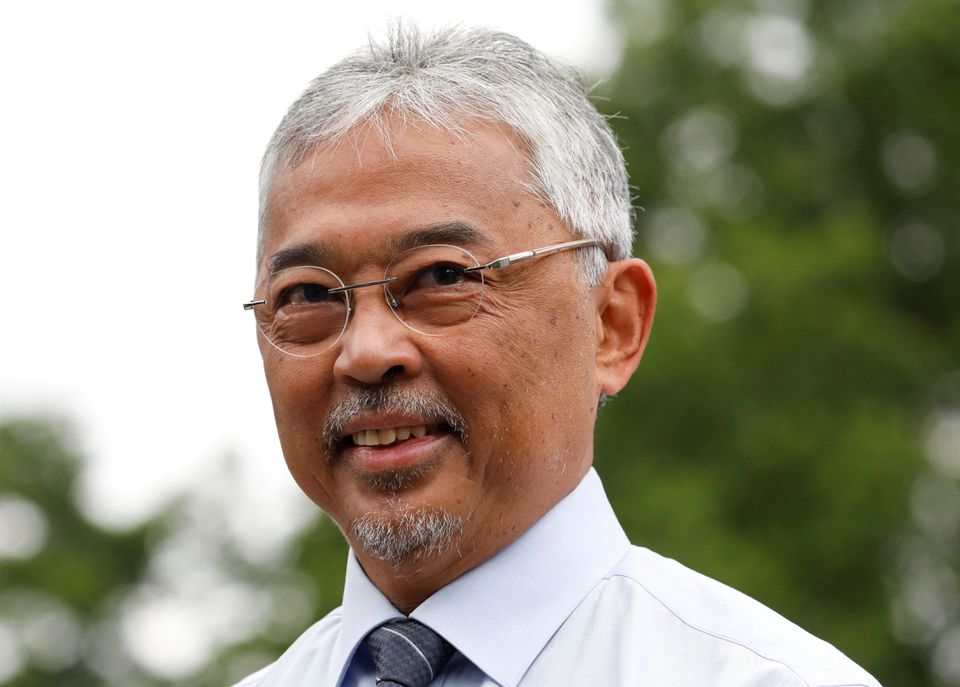
“Let me make a decision soon,” the king told reporters outside the national palace.
He also asked Malaysians to accept any decision about the government formation.
In a statement later, the palace said no lawmaker had managed to get a simple majority to be appointed as the prime minister. It invited Anwar and Muhyiddin for an audience with the king at 1630 local time (0830 GMT).
The uncertainty hit the Kuala Lumpur stock market (.KLSE), which fell for a second day on Tuesday. Significant election gains by an Islamist party added to investors’ fears, notably over policies on gambling and alcohol consumption.
Its electoral gains have also raised fears in multicultural Malaysia, which has significant ethnic Chinese and ethnic Indian minorities following other faiths. The PAS Islamist party has advocated for sharia law.
Malaysian police cautioned the country’s social media users to refrain from posting “provocative” content on race and religion after the divisive election.