
 Published at: 2024-01-18
Many of the glacial lakes in the Manang district are currently limited to pictures, but in reality, they are disappearing alarmingly.
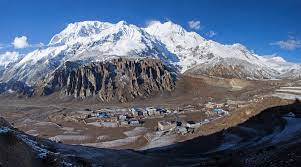
Gangapurna Lake, situated at 3,820 meters above sea level, is one such lake rapidly turning into a ground, causing concern for Kalu Ghale, a local resident of Disyang Rural Municipality-5 in the district.
Recalling the color and natural appearance of the glacier stream that once flowed by his house, Ghale expressed his worry that many small glacier lakes in the district were either receding or drying up. Contrary to his belief that the glacier lake could attract tourists, he noted that the lake was transforming into a ground.
First brought to the public’s attention by Swiss geologist Dr. Toni Hagen in 1957, the Gangapurna glacier, spanning around nine kilometers in length, has been the subject of studying geological formations and climate change, according to Ghale.
The Institute of Tibetan Plateau Research had already conducted research on the glacier’s flow, which is shrinking every year. Shalikram Sigdel, one of the researchers, warned of the threat of glacier lake disappearance due to global warming triggered by climate change, unexpected snow avalanches, and rainfall.
Amidst the risk and fear of losing glacier lakes like Gangapurna, the Disyang Rural Municipality is moving forward with a plan to restore Gangapurna Lake to its original form.