
 Published at: 2024-09-24
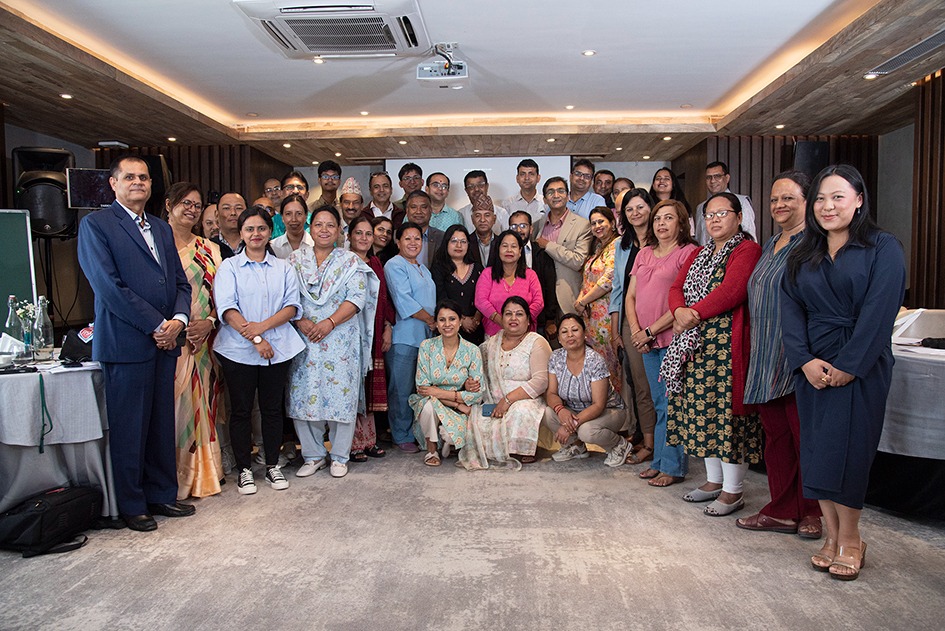
Trade union leaders representing workers have been calling on the federal government to move towards a fairer tax system that provides essential public services, including health care, sanitation and local government services safeguarding the economic justice. In a two-day meeting held in the capital on 23rd and 24th September, union representatives discussed the current tax system and its impact on workers and public services. The trade union leaders have also called upon to take steps towards tax exemption, tax reduction to common people and implementation of wealth tax on the world’s riches. Nepal should be able to establish itself as a progressive, pro-labour country by bringing the wealthy under the tax bracket and also take necessary step to reduce tax evasion says South Asia Sub-Regional Secretary of Public Service International (PSI), Kannan Raman.
Critically assessing Nepal’s current tax policies and what can be done to improve revenue for public services, Professor Achyut Wagle said that the revenue deficit has been increased alarmingly in recent days in Nepal.
“While depicting the picture double taxation scenario of Nepal, we have to pay tax even under the social security heading while those who do not have enough income to feed, are also obliged to pay not only the expenses for health, education and treatment. This is against the principle of tax justice” said Yogendra Kunwar, the President of National Trade Union Congress (NTUC)/ Joint Trade Union Coordination Centre (JTUCC).
Binod Shrestha, president of (GEFONT) Nepal, said, “Trade unions have now reached a situation where they have to increase the scope of their work and increase the financial literacy. Based on good governance and social justice, trade unions must now make a case for the distribution of state resources. Who will pay how much tax and why? This is a serious question today.”
President of All Nepal Federation of Trade Unions (ANTUF), Jagat Simkhada said, “If the state strictly monitors the accounts of a handful major corporate houses in Nepal, food can be provided at concessional rates to workers across the country. The state can no longer escape and keep on imposing equal taxes on both workers and owners, this is not how it works.”
Facilitator and economist Ms. Deha Bhatta said, “The UN Convention on Tax is a framework advocating Tax justice globally. So, the Tax Stakeholders within the country need to unite and help the country representative take ideas to put forward in the UN Convention.” Trade union leaders representing workers have called on the government to take bold steps in reforming the national tax system towards fairness. The participants of the seminar emphasized that the state should play a special responsible role in the livelihood and social security of differently abled citizens. Women, similarly, are unfairly taxed and remain excluded from the social security net. On one hand, it is probably not fair that the rich can hide the illegally accumulated wealth while we do not get the minimum wage or even social security. Also, there is a need to work at the global level through UN conventions for a fairer tax justice system. Hence the slogan: “Tax the wealth not the worker! “